|


ABOUT Us
|


Our GALLERY
|


Our MEETINGS
|
WELCOME
The term "bonsai' properly refers only to the Japanese art
of growing miniature trees. The Japanese aesthetic is centered on the principle
of "heaven and earth in one container". In its perfection, bonsai is
an expression of Zen Buddhism and expresses how the past, the present, humanity,
the elements and change all are intertwined into this unique method of meditation
and expression.
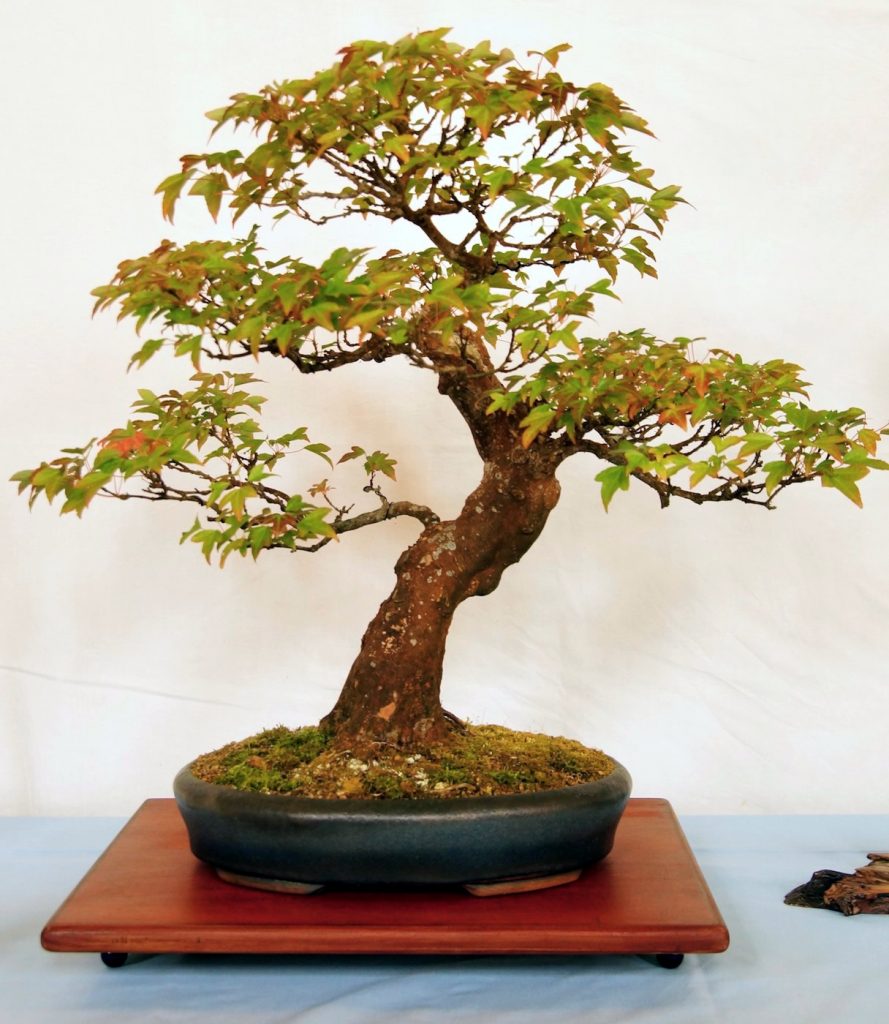
The Japanese bonsai are meant to evoke the essential spirit of the plant being
used: in all cases, they must look natural and never show the intervention
of human hands. However, the art of bonsai also has strict criteria for success
and rigid rules which are for the most part unbroken. For example, tree
branches must never cross and trees should bow slightly
forward, never lean back. Going beyond
the prescribed rules allows aesthetic growth in the bonsai art, which many
of the masterpieces created by bonsai masters have shown.
The Chinese art of growing miniature trees, properly
called penjing , seeks to capture
the essence and spirit of nature through contrasts. Philosophically,
this craft is influenced by the principle of Taoism ,
specifically the concept of Yin and Yang:
the conceptualization of the universe as governed by two primal opposing but
complementary forces. Inspiration is not limited to nature, but also
from poetry and visual art, of which factor similar aesthetic considerations.
Penjing has less emphasis on technical perfection, and the art is not as rigidly
categorized as the art of bonsai, and such things as tangled roots or pruning
scars (which are against the bonsai aesthete) are allowed if it fits the overall
design. Miniature items placed next to a miniature tree (such as miniature
pagodas and tiny men with fishing rods) belong strictly to the realm of penjing
and are anathema to the realm of bonsai.
|